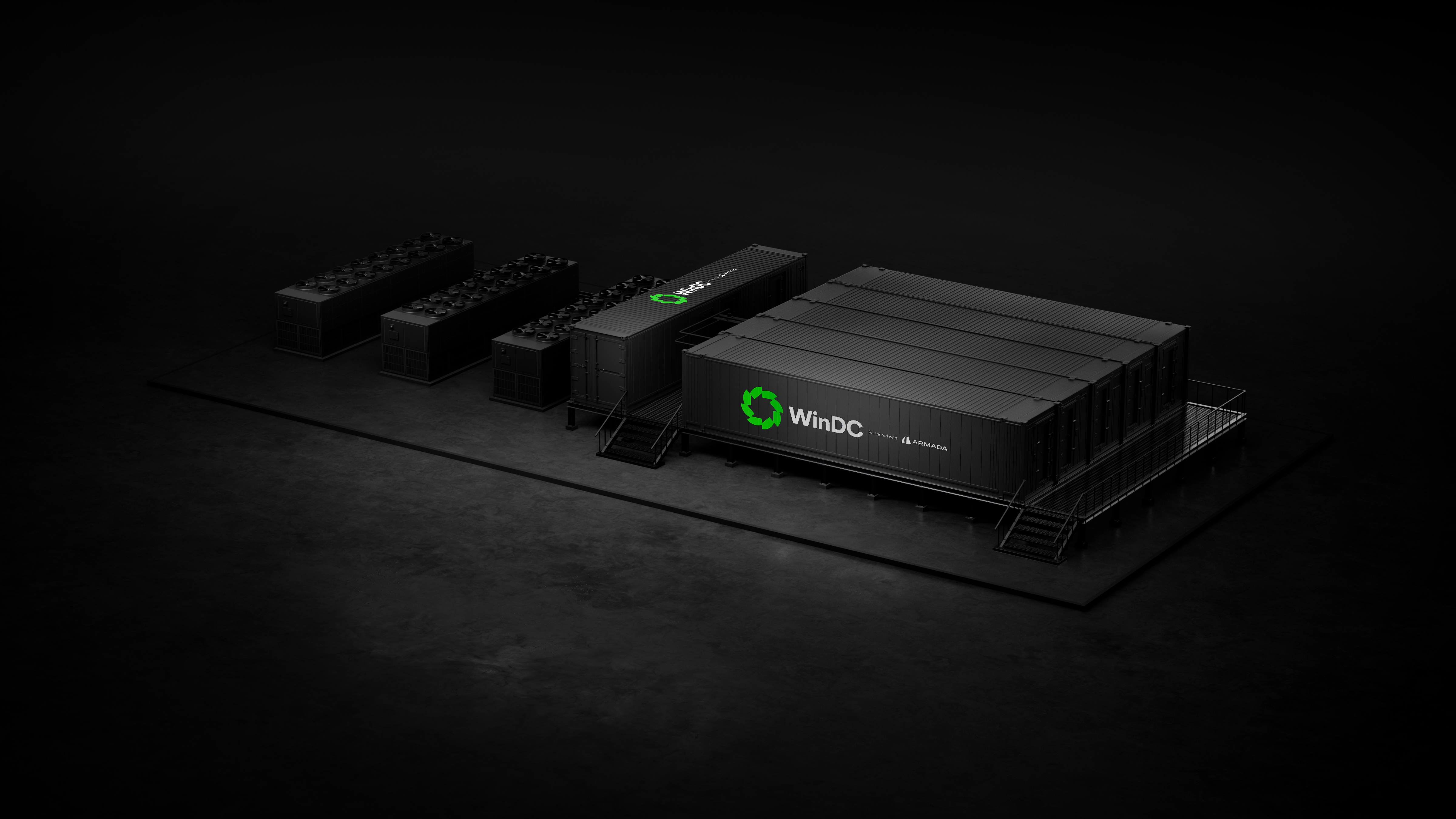
Australia needs more compute, and it needs it faster than traditional construction can deliver. AI adoption, cloud growth and data sovereignty requirements are all pushing demand up, while grid connections, planning approvals and multi-year build programs hold supply back.
Prefabricated data centres are one of the most practical answers to that gap. Instead of building a facility on site from the ground up, the data centre is manufactured in a factory, tested, and delivered ready to connect. This guide explains what prefabricated data centres are, how they are built, and when they make sense for Australian organisations.
What Is a Prefabricated Data Centre?
A prefabricated data centre is a data centre whose core infrastructure is built off site in a controlled factory environment, then transported and installed at its final location. Power distribution, cooling, racks, fire protection, monitoring and security are integrated and tested before the unit ever leaves the factory.
The term covers a few related approaches:
- Prefabricated modular data centres, where complete data centre modules are built to a standard design and combined to reach the capacity needed.
- Containerised data centres, where the whole facility is fitted inside an ISO shipping container, making it portable by truck, rail or ship.
- Prefabricated power and cooling modules, where supporting infrastructure is built off site and paired with IT modules or an existing building.
In practice, most modern deployments combine all three: standardised IT modules supported by prefabricated power and cooling, delivered as a single system.
How a Prefabricated Data Centre Is Built
The biggest difference between prefabricated and traditional data centres is where the work happens. A typical prefabricated deployment follows four stages.
1. Design to a standard. Modules are engineered once and repeated, rather than designed from scratch for every site. Rack layouts, cooling and power are sized for the target workload, whether that is CPU, GPU or a mix.
2. Build and test in the factory. Electrical, mechanical and IT integration is completed under controlled conditions. Each module is tested before it ships, so problems are found on the factory floor rather than on site.
3. Prepare the site in parallel. While modules are being built, the site is prepared with a pad, power connection and network links. Running these streams at the same time is what removes years from the schedule.
4. Deliver, connect and commission. Modules arrive ready to connect to power and network. Commissioning focuses on integration rather than construction.
The Benefits of Prefabricated Data Centres
Speed. Traditional data centre construction in Australia typically takes two to five years. Prefabricated deployments can go from site assessment to live compute in months. WinDC's modules, for example, are designed to be operational in approximately 90 days.
Predictable quality. Factory build and testing produce consistent results across every module, with less exposure to weather, site labour shortages and on-site rework.
Capital efficiency. Rather than building for capacity you may need in ten years, you add modules as demand grows. Capital follows actual demand instead of forecasts.
Location flexibility. Because prefabricated modules don't depend on a large purpose-built building, they can be deployed where power is available, including regional and remote sites that traditional data centres can't reach economically.
Portability. Containerised modules can be relocated if requirements change or a better site becomes available. That turns data centre capacity from a fixed asset into a movable one. See how portable data centres work in practice.
What to Consider Before You Choose Prefabricated
Prefabricated data centres are not the answer to every requirement, and the right choice depends on the workload. Before committing, it's worth working through a few questions:
- Power: Where will the power come from, and is it reliable, affordable and low-emission? Power availability is now the biggest constraint on new compute in Australia.
- Density and cooling: AI and GPU workloads need far higher rack densities than traditional IT. Check that the modules support liquid cooling and the densities you need.
- Resilience: Look for N+1 redundancy for power and cooling, remote monitoring, and clear service levels.
- Connectivity: Confirm fibre, 5G or satellite options at the site, and how traffic is managed across distributed locations.
- Sovereignty and compliance: If your data must stay in Australia, make sure the infrastructure is deployed and operated under Australian jurisdiction.
- Scaling and exit: Understand how capacity is added, and whether modules can be moved or redeployed later.
Why Prefabricated Data Centres Suit Australia
Australia has a particular combination of challenges that prefabrication is well placed to solve. Metropolitan grids are congested, and new data centre connections can take years. At the same time, the country curtails large amounts of renewable energy every year because the grid cannot absorb it, much of it in regional areas far from existing data centres.
Prefabricated, containerised data centres can be placed where that renewable energy is generated, drawing power behind the meter rather than through the congested grid. That combination of speed, location flexibility and clean power is difficult to achieve with traditional construction. You can read more about the curtailment problem in our article on how modular compute is solving it.
How WinDC Builds Prefabricated Data Centres
WinDC designs and deploys prefabricated modular data centres across Australia. Each module is a factory-built, 20- or 40-foot ISO containerised data centre delivering 100 kW to 1.8 MW of critical IT load, with configurations for GPU, CPU or mixed workloads.
- Advanced liquid cooling for high-density GPU clusters, with N+1 redundancy for power and cooling
- Hardware-agnostic support for NVIDIA and AMD GPUs and enterprise servers
- Starlink, 5G and fibre connectivity, with centralised fleet management and 24/7 monitoring
- Deployment directly at renewable generation sites, with zero Scope 2 emissions verified by Grokens
- Fully relocatable by truck, rail or ship, so capacity can move with demand
Together, these modules form Australia's AI factories: sovereign, renewable-powered compute that can be deployed in approximately 90 days instead of years. For a side-by-side look at the two approaches, see modular data centres vs traditional data centres.
Frequently Asked Questions
What is the difference between a prefabricated and a modular data centre?
The terms overlap. Prefabricated describes how the data centre is built, off site in a factory. Modular describes how it scales, in repeatable units. Most prefabricated data centres are also modular.
How long does it take to deploy a prefabricated data centre?
It depends on the design and site, but prefabricated deployments are typically measured in months rather than years. WinDC's modules are designed to go from site assessment to live compute in approximately 90 days.
Can prefabricated data centres run AI workloads?
Yes, if they are designed for it. AI workloads need high rack density and liquid cooling, so look for modules engineered specifically for GPU clusters.
Are prefabricated data centres permanent?
They can be. Many are installed for the long term, but containerised designs can also be relocated if requirements change.
Talk to WinDC about deploying prefabricated, renewable-powered data centre capacity for your organisation. Get in touch.