In 2025, Australia wasted 7.2 terawatt-hours of renewable energy — not because we didn't need it, but because we couldn't move it.
Wind farms, solar arrays, and hydro facilities across the country generated clean electricity that the grid couldn't absorb. Transmission infrastructure was congested. There was nowhere for the power to go. So operators curtailed it — they shut off the generation and the energy simply wasn't produced.
Seven-point-two terawatt-hours. Enough to power millions of homes. Enough to run significant AI compute infrastructure. Gone.
And the problem is getting worse. Forecasts suggest curtailment could exceed 10 terawatt-hours in 2026 as renewable capacity continues to grow faster than transmission infrastructure can keep pace.
This is one of the most significant structural problems in Australia's energy transition — and it's creating an unexpected opportunity for organisations that need compute infrastructure at scale.
Why Australia Curtails So Much Renewable Energy
To understand the curtailment problem, you need to understand how the electricity grid works.
The grid is a transmission system — a network of high-voltage lines that carry power from where it's generated to where it's consumed. The amount of power that can travel through any section of that network is limited by the physical capacity of the lines, transformers, and switching equipment.
Australia's renewable energy boom has largely happened in regional and remote areas, where land is abundant and wind and solar resources are excellent. But consumption is concentrated in cities. Getting power from a wind farm in regional South Australia or a solar installation in outback Queensland to the households and businesses that need it requires transmission infrastructure that, in many cases, simply doesn't exist at sufficient capacity.
When more power is generated than the grid can carry, the system operator has two choices: build more transmission, or curtail the generation. Transmission takes years and billions of dollars. Curtailment is immediate and free.
The result is a paradox at the heart of Australia's clean energy transition: we're building more renewable generation than ever before, but we're wasting an increasing proportion of what we build because we can't get it where it needs to go.
The Economic Cost of Curtailment
Curtailed energy is not just an environmental problem — it's a significant economic one.
Renewable energy operators invest hundreds of millions of dollars building solar and wind facilities. Their business model depends on generating and selling electricity. When their assets are curtailed, they generate power they cannot sell and earn no revenue from. In some cases they pay to keep equipment running during curtailment periods. The economics of their projects deteriorate.
This has two downstream effects. First, it makes renewable energy investment less attractive, slowing the very transition Australia is trying to accelerate. Second, it keeps electricity prices higher than they need to be — because curtailment reduces the supply of cheap renewable power that would otherwise push wholesale prices down.
The curtailment problem is, in short, one of the key reasons Australia's clean energy transition is taking longer and costing more than it should.
The Grid's Slow Response
The obvious solution is to build more transmission infrastructure. Australia is investing in exactly this — the Rewiring the Nation programme and state-level transmission projects represent tens of billions in planned infrastructure investment.
But transmission takes time. Major transmission projects in Australia have typical timelines of 8 to 15 years from planning to commissioning. The renewable energy capacity being curtailed today will still be curtailed in a decade if we rely on transmission investment alone to solve the problem.
Grid-scale battery storage offers a partial answer — absorbing excess generation during curtailment periods and releasing it when demand is higher. But batteries have limits. They can shift power across hours, not across the structural gap between where generation is located and where consumption is concentrated. And their capacity, while growing rapidly, is nowhere near sufficient to absorb the scale of curtailment Australia is experiencing.
The problem needs a different kind of solution.
Behind the Meter: A Different Model
What if, instead of trying to move the power to where the compute is, you moved the compute to where the power is?
This is the logic behind behind-the-meter deployment — placing compute infrastructure directly at renewable generation sites, connected to the power source before it reaches the grid. The compute consumes power that would otherwise be curtailed. The renewable operator earns revenue from generation that would otherwise go to waste. The grid benefits from reduced transmission demand.
It's an elegant solution to a structural problem.
For a renewable energy operator, the economics are compelling. Instead of curtailing generation and earning nothing, they can supply a modular data centre deployed on their site and earn a meaningful revenue stream from power they were previously throwing away. The data centre operator gets access to abundant, cheap, clean electricity. Both parties benefit.
The technical requirement is that the data centre infrastructure must be able to deploy at the renewable site itself — which means it can't be a traditional data centre. Traditional data centres take years to build and are permanently fixed. You can't construct a conventional data centre at a wind farm in regional New South Wales in time to capture curtailed generation this year.
You can deploy a modular data centre.
How Modular Compute Addresses the Curtailment Problem
WinDC's modular data centres are designed specifically for this deployment model.
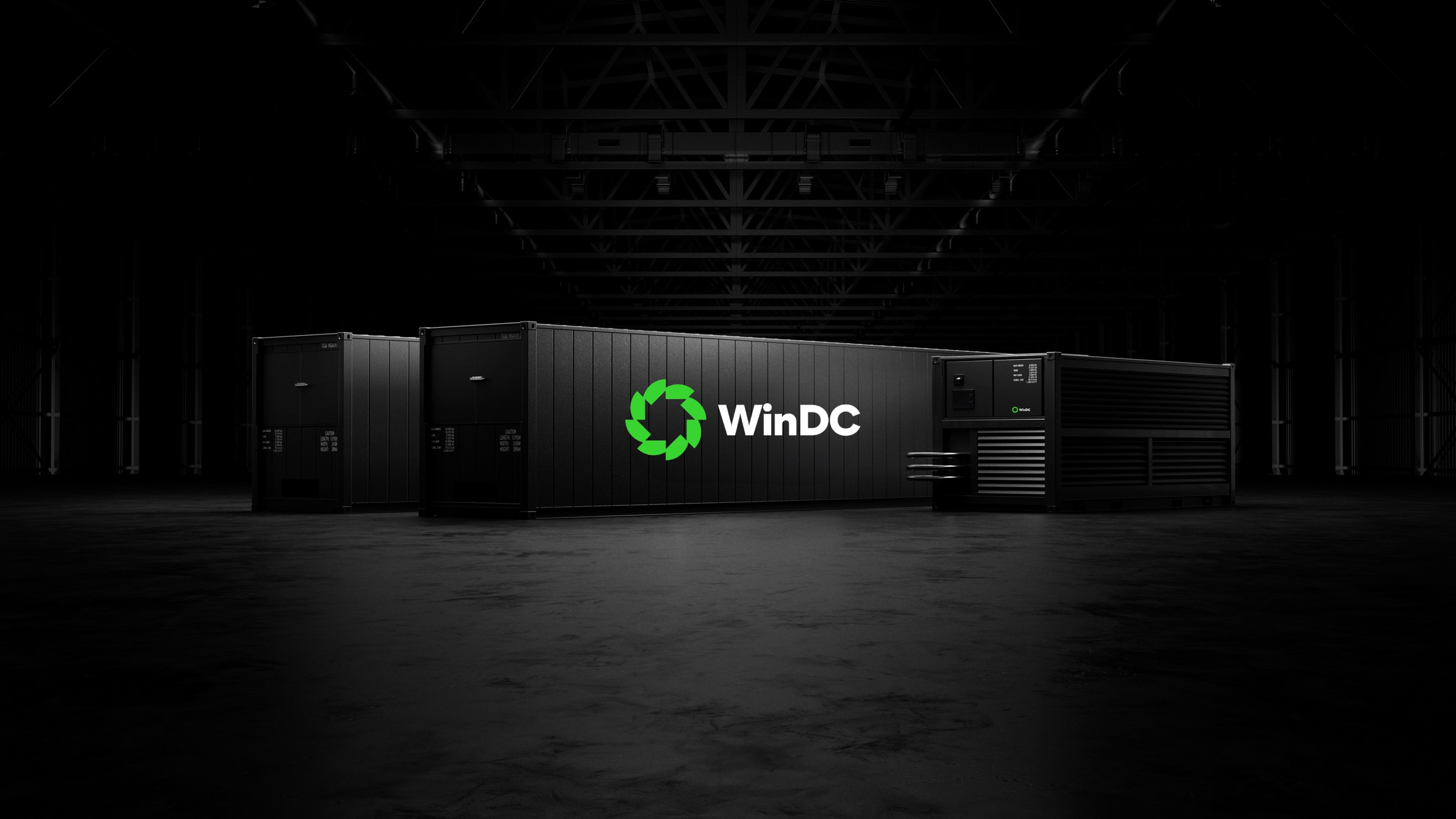
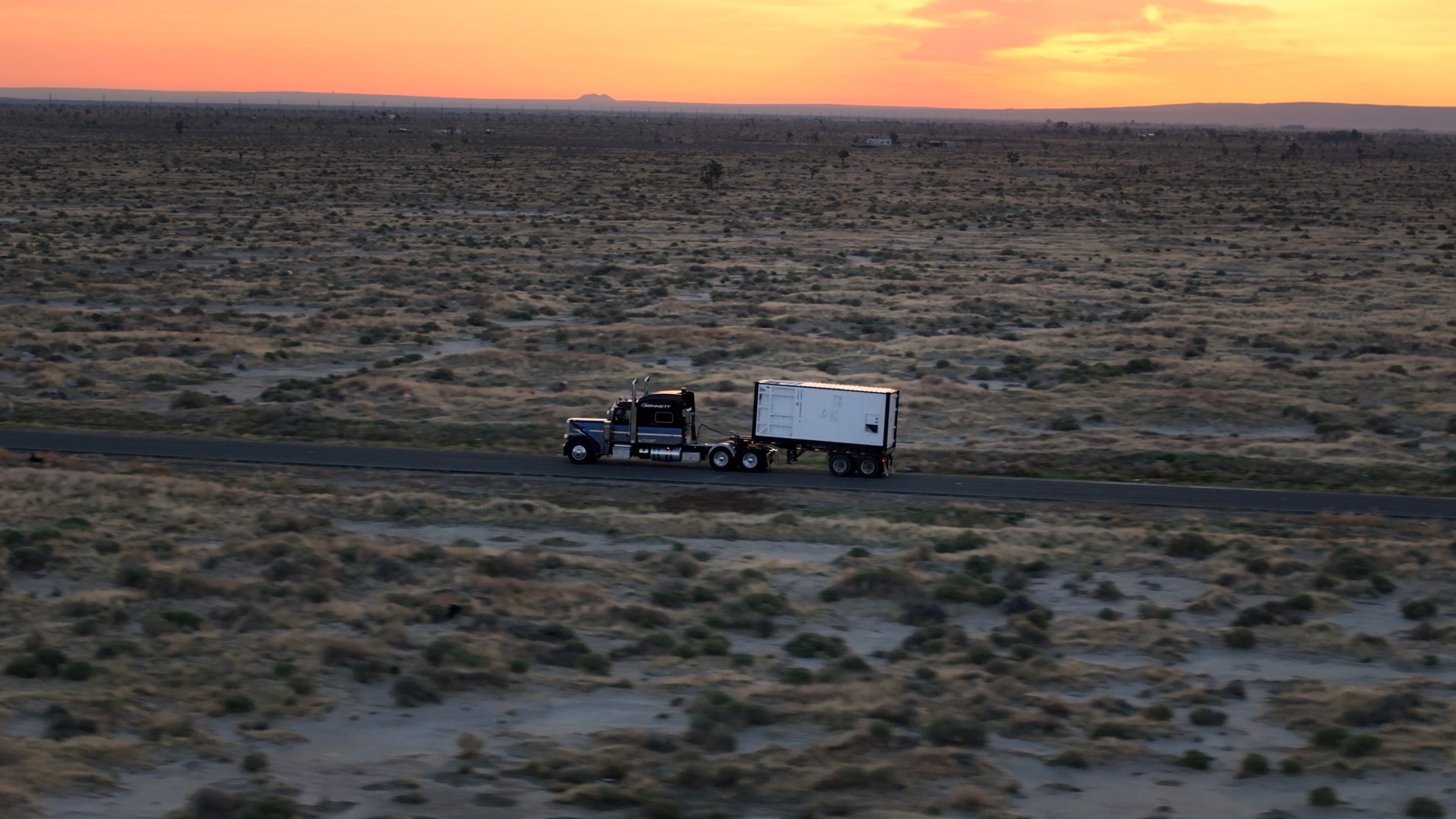
Each module is an ISO-conformant containerised unit built in a factory and shipped to site — fully equipped with compute hardware, liquid cooling, redundant power systems, and fleet management. From site assessment to live operations in approximately 90 days. No grid upgrade approvals. No civil construction programme. No multi-year planning cycle.
The modules connect directly to the renewable generation asset, behind the meter, drawing power from the source before it reaches the grid. The result is a renewable energy operator that has converted a stranded asset — curtailed power — into a revenue-generating one. And a compute customer that has access to 100% renewable electricity at dramatically lower cost than grid-connected alternatives, delivered at up to 50% less than comparable hyperscaler pricing.
For the renewable operator, WinDC's deployment model requires minimal site works and no long-term grid infrastructure commitment. The modular units are also fully relocatable — if the deployment location changes or the operator's situation evolves, the infrastructure moves with it.
Verified Zero-Emission Compute
The behind-the-meter model does something else that's increasingly important: it makes clean compute claims verifiable in a way that grid-connected alternatives cannot match.
When a data centre draws power from the grid and purchases RECs or carbon offsets to claim zero-emission status, there's a significant gap between the claim and the reality. The data centre is running on grid power — which in Australia still carries significant carbon intensity — and accounting for that consumption through certificates that may or may not correspond to actual clean generation.
When WinDC deploys a modular data centre at a wind or solar facility and draws power directly from the generation asset, there's no gap. The compute is running on the renewable electricity being generated metres away. The connection is direct and verifiable.
Grokens, WinDC's carbon attestation platform, maps every GPU-hour of compute consumption to the actual renewable generation it was powered by — providing audit-ready, real-time carbon reporting at a level of granularity that grid-connected data centres cannot offer.
For enterprise organisations with Scope 2 emissions reporting obligations, government agencies with sustainability commitments, and research institutions needing to demonstrate the environmental credentials of their compute infrastructure, this distinction matters.
The Broader Opportunity for Australia
The curtailment problem and the compute demand problem are both growing. And they're growing in the same direction.
Australia's renewable energy curtailment is forecast to increase. Australia's demand for sovereign AI compute infrastructure — compute that stays on Australian soil, under Australian jurisdiction — is also increasing rapidly. The Australian Government endorsed 15 data centre projects worth A$51.9 billion for prioritised government support in March 2026, reflecting the scale of investment now flowing into the sector.
The opportunity to connect these two trends — deploying compute at renewable generation sites to absorb curtailed power — is significant. It addresses the curtailment problem, reduces the cost of clean compute, supports Australia's sovereign AI capability goals, and creates skilled employment in regional communities that have historically missed out on digital economy investment.
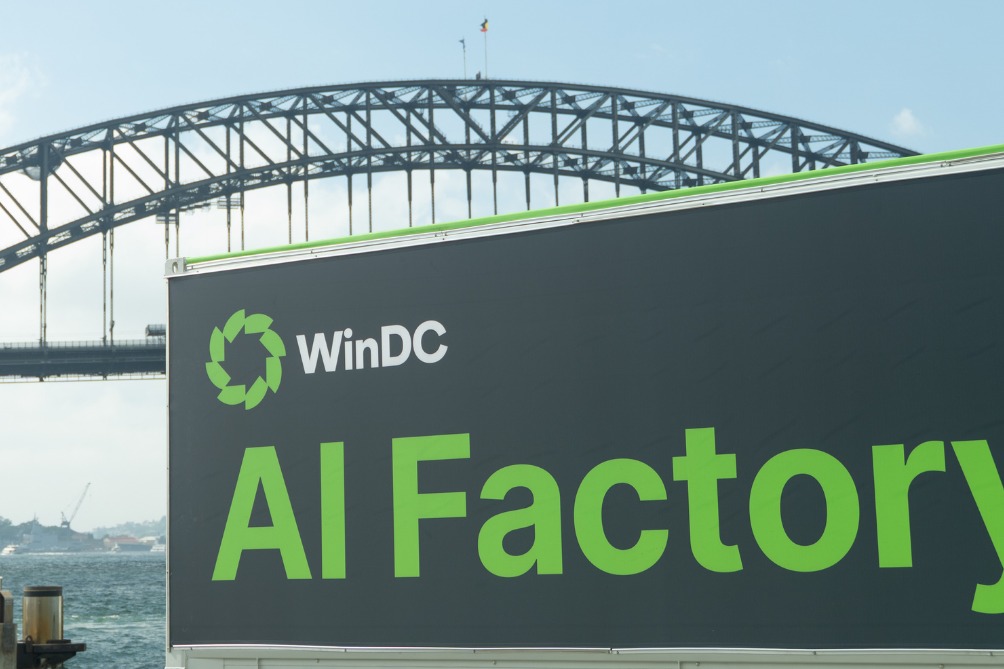
WinDC's modular data centres and AI Factories are built around exactly this model — deploying at Australia's renewable generation sites to turn stranded energy into high-value compute.
What This Means for Renewable Energy Operators
If you operate renewable generation assets in Australia and are experiencing curtailment — or expect to — the economics of behind-the-meter compute deployment are worth understanding.
WinDC can deploy a modular data centre at your generation site in approximately 90 days, creating a revenue stream from power you are currently unable to sell. The infrastructure is owned and operated by WinDC. Your obligation is to supply power behind the meter at an agreed rate. You convert a cost — curtailed generation — into recurring revenue.
The modular units are also non-permanent. If your circumstances change, the infrastructure can be relocated. There's no long-term site commitment that outlasts the commercial arrangement.
If you generate renewable power and want to explore what behind-the-meter compute deployment could mean for your asset, get in touch to discuss your site and requirements.
WinDC builds and operates modular, renewable-powered data centres and AI factories across Australia. Deployed in ~90 days. Zero Scope 2 emissions. Sovereign compute at scale.