Things. Reasons. is an independent podcast. The views expressed by hosts and guests are their own and do not represent any company or organisation.
Content is for general information and entertainment only and should not be taken as professional, legal, or financial advice. While care is taken, no guarantee is made as to accuracy. Any references to people or organisations reflect personal opinions only and are not intended to harm reputation or imply wrongdoing.
Follow Naran McClung on LinkedIn here: https://www.linkedin.com/in/naranmcclung/
Follow Jono Staff on LinkedIn here: https://www.linkedin.com/in/jonathanstaff/
Watch on Youtube: https://youtu.be/jCWz0tnbwNk/
And don’t forget to subscribe and rate the show! We love hearing your thoughts and answering questions. For all enquiries, contact pru@thingsreasons.show
Episode Summary
What happens when the world’s fastest-growing technology meets one of Australia’s biggest natural advantages — renewable energy?
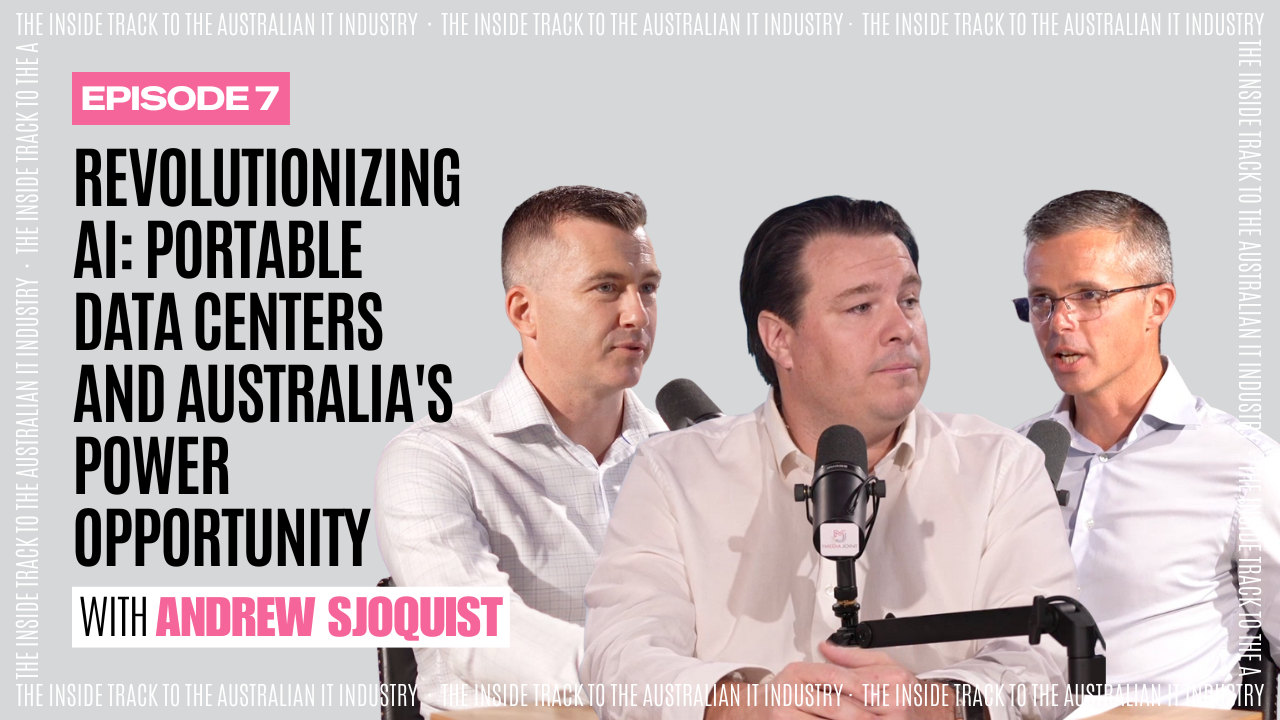
In this episode, Andrew Sjoquist — Australian tech founder and CEO of WinDC — joins us to unpack the explosive energy demands of AI, why traditional data centers can’t keep up, and the bold idea he believes could reshape the industry.
Andrew breaks down:
- How portable, renewable-powered AI data centers actually work — and why they could transform access to compute.
- The limitations of today’s hyperscale data centers and why proximity to energy matters more than ever.
- What this shift means for regional Australia — jobs, infrastructure, and new innovation hubs.
- Why understanding the power supply chain is becoming a core skill for tech leaders.
- The role of government, regulation, and long-term policy in enabling (or blocking) AI growth.
A sharp, practical conversation about energy, innovation, and the global race to build the infrastructure AI will need next.
Episode Transcript
Ladies and gentlemen, here we are again for Things, Reasons. We are an independent show, it is our show, it means we can say whatever we want, and this is the show where we cater to the needs of IT leaders. Should we do a good job all around Australia? So welcome to another episode. Now, Jono, I guess the first question I need to ask is, what have you been up to?
Mate, I've been so busy this, uh, downhill run of Christmas is crazy. Uh, taken on a lot, uh, work life, home life. But I'll tell you one thing I'm pleased about. Mm-hmm. I'm back at the gym. Right. I've been suffering with a rotator cuff injury. Okay. Maybe it's 'cause I'm getting old or... Right. Who knows. Okay. But, uh, but we're back. We're feeling good. Good. Everything's great.
And, um, I'm pretty pumped to be here today 'cause this is a cool episode.
It is a cool episode, we're gonna be announcing some interesting things. We do have a guest, we're not ready to mention the guest just yet. Um, last week I was in San Francisco, and so it was Microsoft Ignite. It's a hell of a long way to go for that, I have to tell you, um, when you drive from the airport to San Francisco, you pass about 60 billboards. Every single one of them said "AI agent this", "Built for AI", "Better with this AI", AI a as the whole place has gone absolutely hog wild around artificial intelligence. It crazy.
Not surprised at all. And did you take a ride in an autonomous car?
I certainly did a Waymo car. It was quite the novelty. There's a thousand of those in the greater San Francisco area. They don't let them go too fast. That's the limitation apparently. Um, every third car on the road in San Francisco is a Waymo car. Everyone's using them. We did use one. The app is fantastic.
You get... here's one cool thing when you book it, you've got a patient five minutes before you have to get in the thing, right? So you could be sitting in a bar, you could be sitting in a restaurant. You're not worried that you're annoying some driver down there who's irate for you to come down. You take your sweet time, finish your drink, walk down, the car automatically unlocks 'cause it's proxy to your phone. You sit down, you can connect your Spotify, you can adjust the air conditioning and the thing takes off and it's brilliant. This is the future. Do you think you'll eventually be able to upload your consciousness to the Waymo car? You had to say the sea, didn't you?
I went there. You trying to wind me up here? Trying to wind you up? Yeah. Look, Jono think the broader use cases for consciousness are still under development. Who's to say? Um, we of course do know that the physical world manifests out of it, so I can't imagine why that would be a problem. Okay. We're revving you up for a whole episode on this, on the next rank cast.
That's right, indeed. Fantastic.
We certainly should introduce our guests. So let me try and do this. Alright, so it is our great pleasure to introduce Andrew Sjoquist. Andrew is an Australian tech entrepreneur with more than 25 years of experience building, securing, and improving Australia's critical infrastructure.
He leads ASE Tech group of companies and has expanded that through smart acquisitions across networks, cloud, security, and managed services. He's a builder who challenges the status quo. He has now launched his next wave, his next venture that is WinDC portable, renewable powered AI factories designed to turn wasted clean energy into sovereign compute.
WindDC's mission is simple: bring compute to the power, not power to the compute. Andrew is a passionate believer in Australian innovation and is driven by creating real opportunities for regional communities, not just metro hubs. Andrew, welcome to the podcast, Jono, I believe you two know each other.
Uh, we do.
Thank you. Thanks for having me. Pleasure. Yeah, it's great to, great to have you here, mate. Fantastic. Excellent. No, thanks for having me. I'm looking forward to this.
Yeah. Being in the conscious with you. Ah, okay. We're all sharing consciousness here. Let's do that.
Alright Andrew. Uh, this episode's pretty big. We're here to talk about something. I think that's pretty exciting. Uh, being WinDC and, uh, the first segment. That we take all our guests through is what's on the table. And obviously what's on the table today is we want to talk about what we think is a revolutionary new concept centered around the AI emergency in Australia.
Uh, talk us through it, mate. It's pretty big. AI's growing really fast and you've got some strong views around power as it relates to AI.
Yeah, so, uh, we all have heard AI and the, the term as it's, um, come about the last couple of years in particular with ChatGPT being launched, uh, it's reached the forefront of everyone's consciousness.
And so as a result of that, the demand is going through the roof. Uh, we're seeing data centers struggling to keep up with capacity. We're seeing, uh, chip manufacturers struggling to keep up with, uh, supply of chips that are needed to make this technology work. Um, but behind the scenes there's a bigger issue that's been looming for quite some time, and that is where is the electricity gonna come from that is going to power this technology?
Mm-hmm. It's extremely energy hungry. Uh, and as a result, uh, without that power supply, the technology will fail to exist.
You could see this coming, if you look at projections for AI, compute, power consumption, I know one of the stats we've talked about in previous episodes. Uh, in America is that AI is predicted to consume the total amount of power in the entire grid by 2030.
So America is looking at doubling the capacity in their electricity grid just to service AI by 2030. And there's similar predictions coming for Australia.
The electricity demand is going through the roof with AI. So if you consider that the chips that are needed to make. Uh, AI possible at each consuming about one and a half kilowatts worth of electricity.
That's wild. Which is about the same as the average Australian household. Yep. The, uh, the supply is definitely under constrAInt.
Unbelievable. Right? And so, key takeaway for me from Ignite, Microsoft's expectation is that they will indeed leverage, um, their M 3 3, 6, 5 penetration globally, which has been astonishing.
I mean, I can't think of too many businesses that don't use M 3 6 5. Microsoft's expectation is that all those businesses will embrace Copilot, will build agents, and if they're successful, you can figure out the tokens necessary for say, a 500 user organisation with anywhere from 500 to 750 agents, what that's gonna mean for inferencing and the demand that you are talking about.
If we're to believe that Microsoft will be successful, even if they own the move the needle 10% or even 20%, that's huge demand all over the world for what you are talking about.
Exactly right. Yeah. And so whilst Australia's been building, uh, a lot of electricity generation, particularly in wind and solaruh, the question is, is it enough? Yeah. And so, uh, the generation is one part of the equation. The next part of the equation is how do you actually get that generated electricity to where you wanna consume it? And traditionally, data centers have been built in metropolitan areas across the eastern seaboard of Australia and Perth as well.
Um, but now the question is, is transmission sufficient to carry that much power as the demand continues to increase inside the data centers to power these chips? Makes sense. And so WinDC uh, we believe that the answer is no, uh, or certainly not in the timeframes that we're talking about. Uh, transmission projects, data center construction projects take years, uh, and billions and billions of dollars to construct.
Uh, we don't have that time. There's a race on, uh, the US Uh, the other parts of the world like China, uh, and Russia and Europe, they're all competing for chips and they're all competing in this somewhat of a, uh, AI super arms race. Mm-hmm. And so the reality is, is that we need this capacity today. And so, uh, we've identified, um, over a period of about seven years working in the renewable energy space that this capacity is starting to exist, the generation that is needed but it's not in the right place. Mm. And so rather than moving the electricity to the compute across transmission lines, uh, our view is to move the compute to the generation. Yep. It's a very simple concept, um, but not easy to execute.
Yeah. This is, uh, this is obviously a very hot topic, both in the political, uh, zeitgeist, mainstream media.
There's a lot of debate about. Energy. There's a lot of debate about the renewable energy mix and, and contribution to Australia's, uh, power infrastructure. There's also a lot of talk around sovereign AI and Australia wanting to participate in what is a huge opportunity globally, but we never really hear anybody connecting the two.
Around the AI opportunity and, and what that means for power. Obviously you're seeing it in the us, they're rapidly building out power infrastructure. China's been upgrading their, their grid for years and building coal fired power plants and any power generation they can for AI but feel like Australia hasn't really connected those two dots yet.
Why do you think that is, Andrew?
Uh, I think that there's an under or perhaps a lack of understanding around how all these components go together. Um, we have a lot of smart people in Australia and we have a lot of, um, innovative thinking, and I think that's come about through, uh, necessity in our, um, location.
You know, we've always been sort of far away from the rest of the world and needed to do that. There's been some amazing pioneers in this industry who've built incredible infrastructure that allows this sort of next wave of thinking to be, to be possible. Uh, and so I think now with those components in place, the submarine cable systems, the existing core data centers, um, and, uh, research in particular, we've got some fantastic researchers in Australia.
Bringing all those ingredients together and leveraging something that we have today gives us the opportunity to really become the world's, uh. Software and AI compute base, and fortunately, we have a very stable geopolitical landscape. Yep. Uh, and we recognize that particularly in the Asian, Asian region, but, but globally as well.
Yep.
Uh, and so I think it's now encumbered upon us to take advantage of the, the right here and now, um, because no one's coming to save us. Yeah. No one's gonna magically invent, um, a electricity generator in the next year or two. Yep. Uh, we can turn on this capacity in 90 days. Yep. Uh, and make it a, a real thing.
Um, of course there'll be other modes of tech of generation that'll occur :nuclear, others that Jono have mentioned. Uh, but they're at least five to 10 years away. Mm. So we need to do something in the, in the immediate term. And this is, uh, WinDC answer to that problem.
It's a fascinating thing. There's a couple of things going on here.
So first, then we talk about policy, um, and think, uh, it's helpful that we have a, a labor government that cares about these things. And the, uh, introduction of the electricity and energy sector plan that was published in 2025. That's all about beating, building, world leading clean energy sector within the country, which is amazing. So the second thing too, if we look at hyperscalers and the way they've built data centers and availability zones around Australia, it's all about latitude and longitude. Longitude, sorry. It's all about proximity, because for the longest time it was seen as important to have low latency connectivity in metropolitan areas, and yet we see, I'll say, demand for inferencing and other capabilities that aren't.
Um, to necessarily linked to that, right? And they don't have to be in the same locations, right? They can be just about anywhere.
That's right. And so if you look at that on a spectrum of, uh, different types of compute that are needed for AI, inferencing being the less dense, um, but more closer to a, a use case or a user, uh, deployment.
And the upper end of the scale is a high density, high powered training, um, computer.
Yep. When you see aims to play in those places, yeah, in the middle, there's always gonna be a need for your cloud style or traditional it. Um, but these edges are real problems that need solving real fast. And so from an inferencing perspective, um, we can distribute, um, 'cause of our footprint into locations very, very quickly.
You know, whether that's, uh, in a particular suburb or NBN point or, uh, spread around the place into, uh, cell towers. At the other end of the scale where there's a need for the high density compute. And so this is where we, we are needing to go and find the power to, to feed these, uh, one and two megawatt AI factories.
Yeah. Um, at scale and multiples of them. Um, that's, that's really the, the way in which we're, we're solving the problem. And so I think, um, from our perspective, um, the need to get to, uh, the generation source to, to supply that power. Yeah. Is fundamental to solving the problem.
Yeah, indeed. And I think, look, one other thing too, um, is different attitudes towards, um, the appetite to embrace public language models versus the need for private as well.
And many organizations that I speak to, um, would jump at the opportunity to have an appropriately sized private large language modeling, I'm sure you can slice and dice that as well. Um, sufficient to run workloads where they don't have to worry about obfuscation and all the other security and risks associated with the public cloud.
And I think we're gonna see greater demand for that as well, which really lends itself to WinDC
Yeah, exactly right. And we're excited by, by the future, we think. Um, certainly the opportunity is now. Uh, like I said, we've been reviewing the market, the, the, uh, the solutions to these problems for better part of seven or eight years.
Um, but the timing is right and that's been driven by the demand. Hmm. So we really see this as an opportunity for Australia to now, uh, introduce a new export commodity. Uh, we've had, uh, some great innovation stump, jump plow, black blocks, flight recorders, wifi. Uh, we've exported, um, some fantastic meat in and wool and merino wool and lamb, uh, and sheep and cattle.
Uh, commodities like, um, uh, mining, uh, all the, all the metals and alls that come out of Australia, tourism education. Now's the time for Australia to export, uh, clean, sovereign, um, AI. We can do that by effectively having the world send us the tokens for processing. Yep. Processing them in a clean and efficient way, and responding with the answers in a very simplistic terms.
Nice. But, well, we truly believe that this is a, an opportunity that Australia should be embracing, uh, with open arms.
We talk a lot about, uh, Australia's abundance of renewable energy. I think you see the federal minister, uh, Bowen, speaking about this actually very recently in the media, we're actually producing more renewable energy than we can consume.
Why is that?
That's right. So last year alone, 2024, there was four and a half terawatt hours worth of electricity that was wasted in renewable energy generation. That's the equivalent of the entire snowy hydro scheme, the original one. Wasted. Wasted. How is it, how does it become wasted? Help our listeners understand what's going on there.
Sure. Very simply, uh, the generation is built, whether that's a certain number of wind turbines or it's a certain number of solar panels are deployed and the generation occurs because the sun rises or the wind blows, but it can't get from that place of generation to the place of sun and that could be for a number of reasons.
Generally, some form of entanglement could be a network entanglement. In other words, the grid can't handle the transmission at that point in time 'cause it's overloaded. Uh, could be economic entanglement perhaps. Um, the electricity pricing is not worth the while for the operator to generate it. And that's becoming an increasing problem with a concept called the duck curve that you'll see because of the, um, the penetration of, uh, residential household, solar.
Uh, and so that's, that's the opportunity is how do we collect that, uh, wasted energy and use it at the generation source to avoid those aliment issues.
Hmm. That's a hell of a lot of power. It is, isn't it? And if you're building a traditional data center in a city, getting access to that kind of powers.
Pretty much Im impossible in today's market. Mm-hmm. Alrighty. Well, look, obvious question, I wanna be the contrarian, if that's the right word. Um, what's stopping us just building more data centers? What's the problem with that?
Yeah. Well, it's a great question and an obvious answer to the, to the problem.
Building more data centers, uh, again, uh, has constraints of different types. Mm-hmm. Um, the key one being power. Yes. again, how do you get the power from the generation to the consumption? Uh, how do you find the land, uh, in which to build that on? Yes. How do you get the approvals? Uh, and so these processes take multiple years to, to go through the various planning stages, uh, and, and scale out.
Um. Then there's also some po uh, policy questions that need to be asked around, is this the right thing to be doing? Mm-hmm. Uh, building, continuing to build large, uh, AI factories, data centers in res, uh, in metropolitan areas that may otherwise be used for things like residential housing, for example.
Yeah.
Um, there's a area in, uh, Sydney, in Macquarie Park, um, which you're both familiar with, uh, which has had a multi-billion dollar transport system installed two brand new metro stations. Um, however, uh, there's less than less people in those areas and more and more power being consumed by, by data centers in those locations.
And so I think whilst that they'll always continue to have a place, um. We refer to them as large metro edges. Effectively, I think you'll find that the scale and the speed at which they need to scale, um, is constrained in too many ways and so there needs to be a new frontier, if you like. Uh, imagine sort of going, going west with the railroads, um, in, in, in a history repeats type moment to, to the US expansion.
Yeah. Um, that'll need to occur. And so we, we believe that, uh, short cutting. Uh, the approval processes and, um, the transmission build times, uh, is the way to get these up and running. Yeah. And that's reflected in our 90 day turnaround. Yeah. So we can basically, uh, from the time that demand is required or capacity is required to the time that it's turned on, uh, less than 90 days.
Yep, indeed. So that's a completely different model. And, uh, I, I'd say what, what feels like a novel idea in Australia. I don't think we're seeing anybody take portable data centers that are AI ready to the source of what is an abundant power resource that's effectively being wasted right now. How did you come up with the idea?
Like, no, like, and why hasn't anybody else done it?
Yeah, it's a good question. It's one that I, I reflect on a lot. Uh, 'cause there's always a reason why people don't do things. I think we saw it early, um, like I said back about eight years ago, uh, with a real life problem with the customer who was building a generation asset.
Uh, when they went to actually connect or get grid connection approval, the grid couldn't handle the capacity that was able to be generated. They hadn't yet built the assets, so they wound back the, the build size but, uh, at that point in time, we asked them whether they're bringing a large load to the generator would be interesting.
They said yes. The idea was sparked and, and off we went. And so over that period of the last seven or eight years, we've been investigating in different methods and ways to do this.
Mm-hmm.
Um, we've settled on a, uh, an execution model that, um, we believe will now, uh, to change the way in which, uh, AI is generated in Australia.
Um, but again, it needed the, needed a rapidly scaling demand, which AI has helped deliver Yep. To, um, to make the concept a reality. So I hear, um, I mean I, a lot of my cycling mates are investment guys, banking guys, and uh, I often ask them, you know, what's trending? What are people interested in? And uh, for the longest time it's been around green energy solutions and capabilities that's been popular in Australia for a long time.
Um, we know that there's a lot of supporting policy in Australia, but equally there's policy in Europe as well that could have an impact. On demand here in Australia for perhaps European headquartered businesses that have got legs and arms in Australia with targets. Can you talk to that a little bit?
Yeah. We're certainly seeing demand from, from organizations that are headquartered in Europe. Yeah. Perhaps some more stringent, um, emissions controls that need to be adhered to. Yeah. Uh, and certainly, um, one or two of those are anchor customers for us that'll be announced, uh, in the early 2026. Wow. Uh, which is exciting.
Um, I think the, uh. The opportunity again, is to let the world know that this is a, a new way to, to compute. Mm. Um, we know that the US in particular has gone quite heavily towards more, uh, sort of gas and other sort of, uh, operational, um, fuels that need to fuel their solutions. But again, these assets are, are already built.
And so there's a question here of um, how do we make best use of an asset that's already deployed? Yes. I'll give you an example. We, we know that there is, um, solar assets that are deployed in Australia that, uh, probably only use to 70 or 80% of their capacity. And this is, they're deployed, they have the substations, they have the panels, they have the inverters, they can't get the grid connections, right? And so the grid connections are leaving basically hundreds of megawatts with the capacity, if not gigawatts, with the capacity stranded, tragic.
And so from our perspective, when we, uh, work with those asset owners to hook up behind the meters and on their sides.
It gives us the capability to effectively simply ramp up Yeah. The, uh, the generation Yeah. That already exists for no additional capital outlay. Yeah. Or little additional capital outlay.
Yep.
Um, and now they have an additional revenue stream and additional return on their assets. So that's amazing. That's why those industries are excited to,
you know, I love the, um, I just love thinking about, you know, the, the workloads and the expectation, the fact that a lot of this stuff isn't 24/7 at all. If I think about a, a leading AI business, um, that we're aware of in Australia, uh, the way they run their business and they work with all the big banks around Australia, uh, it's a big batch job. Once a month, they've got their opportunity to deliver their quote AI outcomes. Um, they spin up all the resources as they need , they run their jobs and they turn everything off. I'm sure they could take great advantage of a capability and I'm sure it'd be a better story for them to be green energy influenced as well. I can think of a great many businesses like that, that just need to run workloads when they need to. And it's not a 24 by seven demand thing at all.
I mean, we've got traditional data centers for that, for those services that are necessary. And I think that's probably the, the changing nature, um, of workload expectation, I think linked to generative AI.
Yeah, no, absolutely is is spot on. And I think, um. That's a phase two for us, we're working through how do we actually balance the need to get a return on the technology investment.
Mm-hmm. So there is hundreds of millions of dollars, if not billions of dollars of chips deployed into these facilities. Yep. Uh, they obviously need to spin a return. Mm. But even in those return models, a lot of the money, um, account for say 80% utilisation in those, in those models. So there's still an opportunity to not utilize them for 20% of the time, achieve the same outcome.
Hmm. Now, have you mapped that across to renewable energy profile? Uh, and capacity factors. Now, capacity factors, uh, are often lower, you know, somewhere in the 25 to 40% mark. Uh, but you can firm that with batteries and other methods and, and the grid itself, uh, but the ability to curtail, uh, purposefully. Um, to, uh, align to renewable generation capacities, but still keep your financial, um, profiling.
Yep. Uh, is, is an interesting concept as well. Mm-hmm. So at this point in time, we're focusing on, uh, maintaining as close to a hundred percent uptime as possible. Yep. Um, again, there's a, there's a culture shift and a, and a thinking shift that needs to occur here.
Yep.
In much the same way that's already occurred in data center space over the last, um, 15 years anyway, and just to quickly recap on that, if you consider when, uh, large, uh, you know, well-known names deployed their facilities into, uh, capital cities. A lot of that was targeting enterprise computer rooms. Move your computer room outta your CBD building into a data center. And so part of the, the proximity argument was you are still nearby. You can still drive there, you can still touch and see your boxes.
Yeah. But connect across town as we've gone towards cloud. As you'd well know Naran. Yes. Uh. People don't care anymore.
No.
Don't care where my thing has been computed. Wouldn't even know where
it was half the time. Exactly.
Yeah. So as long as it's within constraints or within the constraint of uh, you know, certain latency boundaries, then we're okay.
Uh, and as you get into more AI workloads and larger workloads, the real latency concerns actually what's happening within the facility. Yeah. It's not about how long it takes to get to the facility, it's when you get there. Is it quick? So certainly, um, the technology shift is helping, um, support this concept as well as it's continues to evolve.
I think you, you were talking there a little bit about financial modeling, certainly, uh, the price of power. Is a significant line item in the cost base for deploying an AI solution, whether you're a neo cloud or an enterprise. Tell us more about the, the cost of power in terms of getting it from the generation site to a facility in a, you know, a grid connected location as opposed to this behind the meter.
I think everybody's heard the behind the meter. Story, but what, what is the actual difference and, and in cost of power when you move behind the meter and, and what's driving that?
Sure. Yeah. So, the, the process of generating electricity, um, is quite complex and there's, it's a huge industry, uh, in terms of keeping that operating 24/7.
It's a number of professionals in that space that, uh, do an exceptional job, even in stormy weather like we're experiencing outside now, um, in, in making that grid run all the time, the process is basically you generate. Um, the capacity you up vault it into a higher voltage transmission, uh, and you send it across the state, across the country.
You down vault it, you consume it in your low voltage equipment, your computer, uh, and so, uh, each of those steps, uh, has capital deployed and needs maintenance. So there's a cost, um, in generation of course, and that's the wholesale energy pricing that you hear, uh, constantly being talked about as declining.
Uh, and then you have the cost of transmission. So building that, the high voltage, big staun you see beside the freeways often. Yeah. Uh, and so that carries, it's called a QoS charge, a transmission use of service charge, and then it uh, down vaults into distribution systems. So distribution, use of service charge, that's your, your ausgrids and your, um, and other local distributors.
Uh, and then ultimately gets consumed. So each of those adds some costs to, to the model by taking out the transmission and the distribution. Effectively, we remove those costs directly, but also we're. Can
you attribute that to a percentage at all, roughly, or?
There is a percentage off the top of my head, I don't have them.
Okay. But, um, there is a, it's well documented. Sounds like a lot. It's regulated. Yeah. Yeah. So the a ER does regulation on that. Each year you'll see them release numbers. Yep. Uh, and so, uh, the um, the generation component also, by being behind the meter, so to speak, mm means we can avoid those charges. But probably more importantly, it's about unlocking trapped capacity.
Yeah. So it's capacity that won't fit in the pipe effectively going out of the site. Yep. So that's why it's being wasted. The pipe's overflowing. It can't take any more power out of that, out of that environment. But
it's almost like a Goldilocks opportunity, you've got that trap capacity, I mean, I love the example you gave of the solar array.
That's just throttled, right? It's unable to fulfill its full potential. That would annoy the owners of that or the investors in that capacity. Yep. I love that. I love, um, the policy shift. I love that it's green as well. All of these macro things coming together, combined with real demand, I guess, really the next question for me is what does this really unlock in Australia and what, what could it mean in terms of jobs and industry outside of big cities?
Yeah. I think, um, there's a huge opportunity for regional areas to, to be enhanced by this. Mm-hmm. Um, it's very, uh, very simply, um, technology jobs that can occur, uh, outside of the metropolitan markets are few and far between today.
Yeah.
However, the opportunity. To provide them is big, and a lot of the reasons people choose not to move to those region is because of a lack of infrastructure. Yep. Um, certainly NBN, for example, has helped with that, but even with the NBN in place, we're still seeing a lot of backhaul occurring where, um, access to services has to come back to a metropolitan area.
Mm. So by distributing, um, resources into these locations, uh, the experience of using some of these cloud services and AI type services should be fairly consistent out in these regional locations. Uh, in terms of, uh, the engagement that we'll have with local communities, um, we will want to contribute to, uh, educating, uh, a next generation of thinkers that are coming through, uh, and certainly, uh, reinvigorating that Australian innovative and pioneering spirit, um, that may have been lost in the last, uh, last little while. I'm sounding like a bit of a, an old timer here, but, uh, I think, you know, if you truly believe that, uh, we live in one of the greatest countries on earth, then there's no reason why we shouldn't, uh, shouldn't double down and see what we can do.
Damn. Right. Right. I mean, like, what is it, 40% of our electricity generation is renewable in Australia right now, and so begs the question, why aren't we taking more advantage of it
Yeah. I think, uh, uh, it, it, it's sort of a surprise to me as well that the abundance of this resource, and the fact that we seem to be doing it the old way. I know, Andrew, you, you and I have spoken about this a bit and we, we sort of asked the question why, uh, sometimes we just keep doing things the same way because that's the way we've always done them.
Yeah.
And uh, and I think this really challenges the status quo for me as a tech professional who has thought about moving to a regional location, uh, many times throughout my life, I, I have to settle with enjoying visiting, uh, places outside of Sydney and coming back. Mm. It's work that's kept me in Sydney, yes.
In a lot of cases in this profession. And so I'm, I think there's a huge opportunity to start to leverage AI and what's happening in that space. To bring it opportunities out of the cities. I wonder whether we've been at the mercy, I mean this might be unfair, but this is just an opinion at the mercy of, you know, the grid and relative transformation pace and power providers.
And I hope, I'm not being unfair by saying that, but if we look at solar proliferation and burden being put on households to try and escape these incredibly rising costs and cost of living due to electricity, prices going up, and so, households around Australia, should they be lucky enough to afford it, and obviously with some grants as well of buying batteries and solar panels to try and create a degree of independence here, what we're talking about with WinDC is somewhat similar and that you are just taking the challenge head on and solving the problem, you know, without waiting for Australia to be in a position where these problems don't exist.
You know, the, the transmission costs, et cetera that you described. Um, I like that. I think that's what Australia should be. We should be innovating like that and taking advantage of the resources that we have, particularly being renewable energy and not waiting for the rest of Australia to catch up and it's such a big continent too, isn't it?
Remember when connectivity was a problem, you know, before the NBN and obviously infra coasts out there adding more fibers. We you got starlink as well. Starlink as well, right? So these problems are getting solved. This is the next thing, right? This is the next thing combined with this generative AI demand that's, um going hog wild. Yeah, absolutely. I think there's a, there's a distributed compute for AI has a place in the model. Yep. Right now, the industry's view of the model is these monolithic data center deployments, and they have to be built on prime real estate in the middle of a housing crisis, frankly, because that's where the power is.
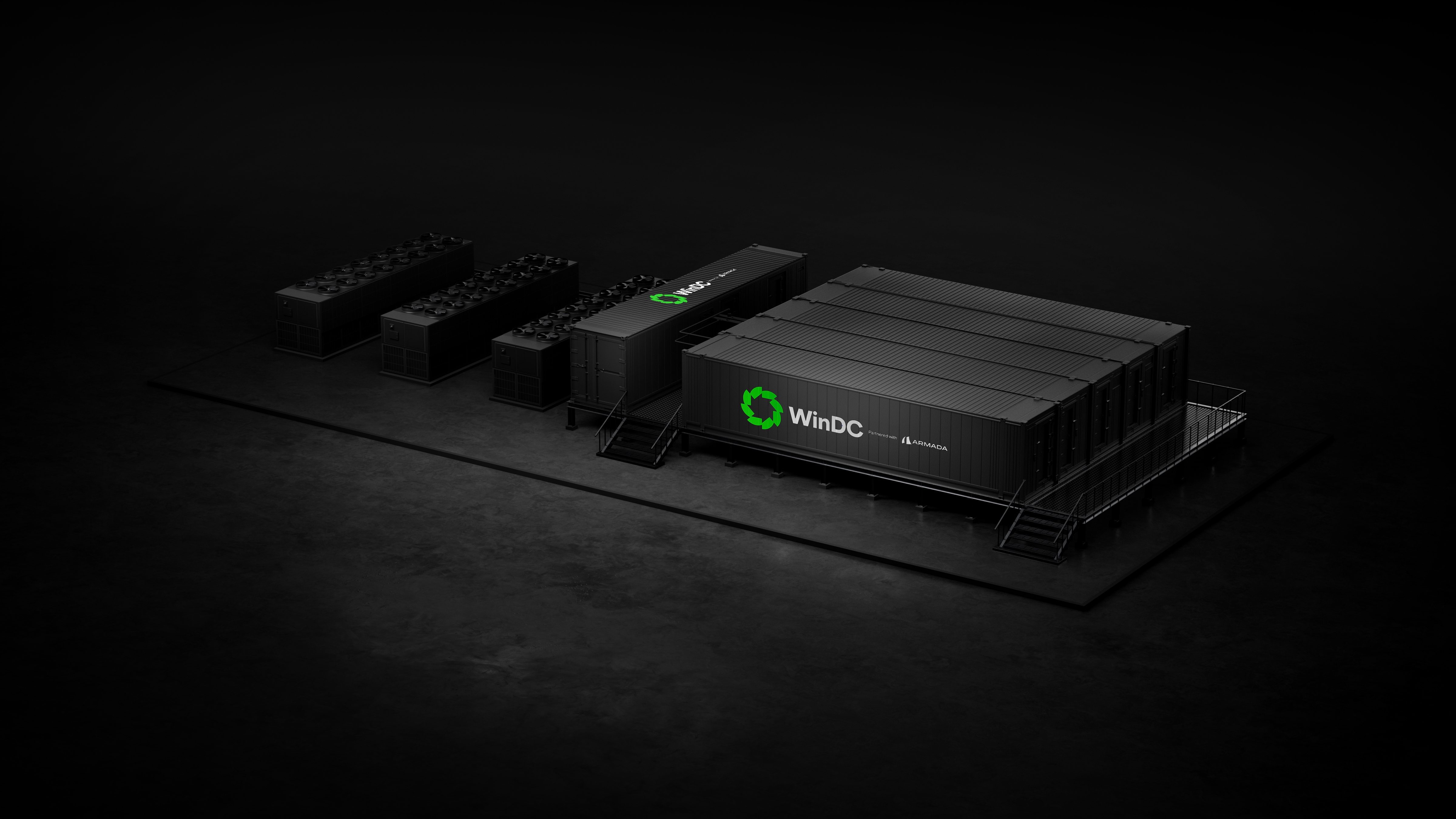
Yep. Um, and I think there's a better way for our listeners who are, so we've talked a bit about WinDC. Um, but if we, if they're gonna go and look it up, what should they expect to see? So these data centers are on the back of a truck. Can you describe the form factor, uh, compliance? Like why, why are these things different?
We've heard about modular data centers before.
Yep. Yeah. So this is part of the, the studies that we've been doing over the last seven or eight years is to work out what is the best form factor, uh, what is the requirements that are needed for, for these facilities. Um, basically, uh, we've conformed to an iso uh, conformant footprint so the, that's a footprint where global shipping went to in the 1950s before, uh, the 1950s when you ship something, you just have to ship it in those bags and hooks, and it was a little bit, uh, rough and ready. Is that how it was done? Yeah. Well, wow. Yep. And, uh, and so basically by fitting it into iso conformant footprint, it means that our transport logistics components are a lot easier.
Mm. So it's a shipping container. It's effectfully, a shipping container, but it's, uh, got a lot more, uh, smarts than the shipping container. Some,
some other stuff going on inside. Yeah. It's got a more data center
and AI factory than a shipping container. Yeah. Uh, and so what it means though is, is that we won't necessarily become a wide elephant.
So let's say that the grid changes and it will or requirements change, and they will, uh, we can relocate. Yeah. And so, uh, today, uh, and for the next 20 or 30 years, there's a number of solar and wind assets that need to, to live their life. Um, government policy suggests that's the way they roll, but if government policy changes or, um, there's a new technology that's introduced, whether that's nuclear or some other technology, uh, and centralization happens again, not dissimilar to centralized, decentralized models and technology. Mm. We can, uh, rejoin and, and reconsolidate our footprints around those areas as well so flexibility for us was key. Um, and that's key also from an investment and risk perspective. Mm. Um, to ensure that we, uh, have some of, uh, adaptability in the model.
Mm.
Uh, and so when you go inside one of these facilities, though, it looks and feels for all intent and purposes, like you're inside a, a mainstream, mainstream data center, obviously a lot smaller. Uh, probably more dense as well so our inferencing units, um, are doing up to 20 kilowatts per cabinet. Oh, wow.
Um, but our larger units are doing, uh, close to two megawatts in that same 44 footprint.
Wow. And you can daisy chain 'em too, right? Yeah. So you can
have multiples stacked up, stack 'em together. Yeah. So, you know, we can just keep scaling out capacity in line with the power capacity.
Yep.
And this is the other thing as well, that constrained assets that we mentioned.
Mm.
Uh, earlier, if there's grid build out that occurs later, we can just start winding back down our often. So if, if that curtailment becomes less of an issue in the future Yeah. You can just move them or, or tune it. Exactly. Right.
Exactly right. So, you know, there's another thing that occurs in the grid too it's called MLF. Uh, margin loss factors. So when you generate electricity in, in the grid, they measure how much you'll lose actually getting it to the metropolitan area. Yeah. Right. And so some of the areas that we're operating in are seeing MLFs as high as, um, 20% Hmm. Or 18%, which effectively means for every a hundred megawatts worth of power you're putting into the grid, you're only being paid for 82.
Yeah.
Right. Or 80. So there's loss straight there that. Um, for, for energy operators, um, go straight to their bottom line effectively.
but more importantly as well as we get down into the network and the inferencing units that we've mentioned, um, we can deploy 'cause of the small footprint into our local substations too.
So if you think about the distribution networks of, um, essential energy and, uh, other ausgrid, other brand names that you know, uh, that control the distribution around your house, by co-locating a 40 foot unit. In their network.
What it ultimately does is it reduces the power prices of everyone around you
Yeah. Because they have to, uh, build and amortize the cost of their substation infrastructure and transformer infrastructure, for example, to, to service those locations. By having a portable, uh, WinDC facility there, it allows us to get maximum utilisation of the infrastructure on day one. Yeah. But then as more residential or more demand goes on the grid, we can take those units away again.
Yeah. So it's a real nice way of also being able to give back to community a much, um, similar way to community batteries as as, um, you are right into with your family now. Yes, of course. Uh, we think there's opportunities to contribute many different Aspects and angles. Uh, and we're excited to get that underway early next year.
Yeah. I mean, you talk about portability and changing demand, possibly changes in policy. I mean, I'm looking here at 2024, there's like 59 major renewable, uh, large scale renewable projects under construction. Right. And so for me, I feel like you're gonna have more and more opportunities increasingly should policy stay the way they are in Australia.
Right? Exactly.
Right. Yeah, exactly right. And so we should just harness it a hundred percent. Yep. So what, what type of, uh, businesses say for our listeners out there, they go, okay like, wow, what, what does this mean for me? Give us some examples of the, the hypothetical use cases for this, I think we mentioned one in terms of some enterprises looking at a sustainability angle, but I think there's more going on.
Yeah. What sort of customers do you see? Taking advantage. There's a couple of key ones obviously the, the green enterprise edge is one, uh, from, it's probably more of a corporate angle who are subject to various emissions controls. Uh, the, the other one is, uh, neo clouds, so this is, um, medium cloud providers who are, uh, focusing on GPU as a service.
Yep. A lot of are getting, um, uh, chips from various vendors being able to contribute them back to, to the large cloud hyperscalers. Yep. A longer term contract. Uh, then we also have the research element as well, and so I think you touched on it earlier, Naren, about around the workloads and scheduling workloads.
Yeah. So researchers in particular often don't mind whether they're batch project job or batch research project, their genomic sequencing or whatever they're doing, finishes this afternoon, tomorrow morning, or the next day? Just as long as it finishes. Yeah. And it's the best price.
Yeah. I'd say if I look across, uh, our own customer base, if I was to put a finger in the air and say, what percentage of those workloads would be considered non-critical production, right?
So it could be dev test workloads, it's probably close to 15-20% of their spend. Right? So if we look across Australia, maybe tier two, lower enterprise organizations, 15-20% of those workloads are considered noncritical. Mm-hmm. Right. Non-production. I mean, they could be anywhere they're not latency sensitive.
Yep. Right. You're talking about pods, dev pods, you know, isolated test environments, whatever it is. Um, that would be ideal as well.
Yep. And the push towards microservices and Kubernetes, these are all architectures Sure. For people developing now Yeah. Lend themselves even more so to that technology and architecture.
Yeah, that's right. Indeed. Uh, Naran, we always say Australia's the, the best country on earth. I think Andrew said it, uh, a little bit earlier. This is obviously a pretty big opportunity and as an entrepreneur, um, I think we were talking earlier, we woke up today. Why am I tackling this? Uh, and, and, but I think there is a bigger, there is a bigger conversation here.
Like what, what could it mean for Australia? If, if we're able to get this right, uh,
I think it could mean Australia gets a deeper and, uh, more prestigious position on the world stage. Uh, as it comes to artificial intelligence, uh, I think I touched on it earlier that geopolitically we're very stable. Um, we've got a good legal system.
We've got a good financial system, so all these things are in our favor.
Yep.
Hopefully that means that as Australia's next to the great commodity and export, we can do that, right? Mm. There's probably arguments that suggest that some of the, uh, export of commodities in certain energy sources haven't been done particularly well, uh, in the last little while.
And so I think, um, by being able to export our electricity over the internet, um, in the form of AI tokens, we. Uh, can leverage what we already have, we can demonstrate to the world that we are, um, a contender and that in the G 20 economy, uh, and we can continue to contribute to society. Yeah, I think, um, the other big consumer electricity over the last decade in this kind of space has been Bitcoin.
Um, and I, I've never really shied away from my opinion on, on Bitcoin. I don't know that generating larger. Strings of random numbers contributes much to society. Um, however the same principle effectively is in GPUs. And I think, uh, if you consider what can be achieved with A GPU,
yeah, different story, completely different ballgame and I think not only the infrastructure play and the commercial play and commodities play, I think we've got amazing pool of researchers in this country as well. We do. And so part of this has also been driven by, um, some engagement that we had with. Some of Australia's leading research institutes Yeah.
Um, over the last little while who have said to us that they just don't have the compute capability to achieve their full potential. Yeah. And so on the one hand, you've got wasted power over here, you've got researchers who can't get access to the compute.
Well bridge the two together. Yeah. And it should, should hopefully yield some different results.
So Australia should continue to be. A leader in that space. You touched on,
you touched on a good point there with your Bitcoin point, and I, I think I share your opinion on that as well. Um, I think it's not wrong to link ethics to outcomes at all. I mean, I think Australians, you mentioned, you know, greatest country on earth.
I think so, right. There's many aspects of our society that works better than certainly many other larger Western countries that we won't name out loud, right? That happens to be true, but you're right. With researchers, they've got real demand, but equally. The researchers and the, and the universities that I work with care about where their power comes from as well.
They absolutely do. And I think that's a general theme and culture in Australia we care about green engine is a major topic and talking point for elections. It's probably a big reason why the labor government's in, if I look at my local electorate as well, all the green initiatives, um, was it Sophie Scamps, you know, that she was pushing, you know, that's what my community's interested in.
Right. And so this linkage to. Say, ethical, renewable, power and demand. I think they go together. And I do wonder with Nvidia too, right? So once upon a time with Nvidia, they used to build, uh, chips and GPUs, uh, knowing the form factor that they were running them in, they had to build them in such a way that they were a little bit more power efficient.
But because the demand in data centers has been so massive and so rapid, um, it's almost like they haven't had a chance to optimize. And they've not bothered to either. Right? And if you look at the power and the direct to chip cooling and the influence on data center design, et cetera, the demand has outstripped the pace of innovation with scaling and building these capabilities in a way that they're sensitive to their power consumption. It's like the world just doesn't care. The only answer to that, frankly, is, well, where are you gonna get your power from? Um, and is it renewable energy? And I think Australians will care about that. And if it means that we can hold our head up high to the likes of US and China and say, this is what we're about. We're about meeting the demand, we're about taking advantage of our renewable capacity. Uh, and we absolutely care about the creation of what might be coined a green token. Yeah. Like a, A Groken. A Groken? Talk us through that. Uh, and, uh, we, we were sort of having the same conversation, but I, I can't take credit for it.
Right. But, uh, but it is, it is an interesting concept, your ability to actually determine where your power came from. Yeah. As it relates to the amount of compute that you are utilizing? Yeah. Yeah. My investment mates want this, right? Like, this is what they talk to me about. Right. There's, there's demand for this in business.
Um, you know, there's super funds that operate with a, an ethical mandate, and they're not the only ones. There's many businesses out there that, from a policy perspective, they are built to need this capability. And it's also more cost effective. Mm. So if you're in business. Uh, if you're in the business of compute you, you can't ignore that.
Mm-hmm.
Correct. Yeah. The groans are a little fury character. I think we've, uh, we've characterized it. Why don't we have one here today, Andrew? We need some merch.
Where is the soft toy? Where, where's the, the plush token? Merch. Yeah. It's come on coming. Alright. Um, yeah, I, I, I think, uh, that little fellow is going to hold the hands of other tokens.
And, uh, show them a greener away. That's the, that's the, the concept.
You got like the evil one, it's like, you know, the devil and the angel and you show you that's, that's what we need here, right? That's right. Alright.
Need emoji too.
Yeah, yeah, yeah. Alright. Uh, like this is a good conversation. We're about to hit our, uh, quick fire three and put you under a bit of pressure.
But just to wrap us up mate, what does, in your view, you mentioned AI was a race. What does Australia need to do right now? To, to stay in this race.
Uh, to stay in the race, Australian needs to focus very carefully on where its electricity supply is going to come from. Uh, in a couple of different horizons. It's the immediate, and I'll call that out to maybe 2030.
Yeah.
Uh, the medium probably out to 2035. And then, then beyond. And there's some decisions that need to be made around a future outlook that, uh, will set us up for success or failure, probably when our grandkids are born. Right. And so that's not that far away. again, feel like an old fella here, but, um, I think there, or maybe I am now, I don't know, but I think, um, if we don't look at that, Australia has a real, uh, challenge on its hands because only 25 years ago, uh, Australia had some of the cheapest energy in the world.
Uh, and so, um, there is multiple ways to solve this problem in those different horizons.
I think we want to continue, uh, the path we're on, to some degree, perhaps supplement the path to some other technologies as well. We, we can't toss the baby out with a bath water and there needs to be some consensus politically, uh, and also commercially and financially around what, uh, energy generation looks like.
Um, out to that, let's call it 2050, so timeframe. So five years, 10 years, 25 years, they're all really important horizons and there needs to be some, um, consensus, uh, and bipartisan support on what that looks like.
Rock and roll. Great insights. Forget about chips, forget about facilities. This is, this is all going to be about power. Entirely.
Yep. Alrightyy. Well, we're up to the point where we're gonna ask our famous quickfire questions Andrew, brace yourself. Alright, here we go. We expect honest answers from you here. Transparency. Alright, let's go. That's alright. That's great. So, question number one, what would be the one piece of advice that you would give your past self before taking on a major tech initiative or challenge?
Uh, just get started. Get started early. Right. And make sure that, uh, you have good advice.
Mm, I like that. I wonder procrastination. It cripples a great many people, doesn't it? People sometimes have ideas, but they just can't get started, right?
That's it. Time kills deals.
It does. Alright. Get stuck in. Get stuck in, okay. Question number two. What's something that you used to believe in, in tech leadership that you no longer do?
Uh, something that I used to believe in, in tech leadership that I no longer do, um, that everyone knows what they're doing.
Ah, we've spoken about this, this,
yeah. So an oldie, but a goodie. Yeah.
Um, that and probably, technology innovation and technology commercialization are two radically different things. Yeah. So what might be technically innovative, it may not be good technically, commercially. Yeah, yeah, yeah. And they often cloud each other,
you know what I mean? Topic of choice, right. A generative AI.
Right now, 95% of POCs don't make it to prod, when they do, they fail. We've spoken about a particular bank in Australia that had a very, uh. Uh, famous fail not that long ago. Um, so yeah, that makes perfect sense. And I think we've spoken before as well. I remember you, our younger selves, when we're going up through the ranks in our careers and you always look at that, that person that had that job that you aspired to and think, geez, I wonder could I do that job?
'Cause they look very capable. Then you get that job and think, what, what's going on here? That's true. You know what I mean? Like there. This guy was talking bollocks. This is all right. I can do this job. Or is it that I'm talking about thought knew? We dunno. Is it just that you transfer the Bollock Tur to someone else?
Well, we spoke about everybody making it up as they go along. Right. Which we're not doing here for, not at all.
Yeah,
not, not at all. Yeah. Good advice. We're all making it up as we go along. Alright. Some degree. Good answer mate. We're aligned by the way. It's okay. Final question for you. What would be your gut check for spotting a good partner or walking away from a bad one?
Ooh, uh, good question. Uh, I think to build good partnerships, uh, takes time. Mm-hmm. So it's about marinating in the partnership and about understanding a whole range of different angles. I think you need to understand, uh, intent. Mm-hmm.
Uh, and. Um, really get under the covers beyond perhaps what's immediately obvious in front of you.
To understand, uh, where that partnership may or may not go.
Right.
And so the marination is a key one. It's a little bit, um, di opposed to the comment around just get started. Yes. So you gotta balance those two things together. Um, but I think, I think it's also a, a measurement capability as well. Mm-hmm.
Um, there's a radio pair that. Uh, that do this quite successfully every year they sit down and they have a, an analysis on, uh, how how's the year gone and do we wanna do it again? Right. I think some of that sort of frank open discussion where you focus on self-assessment of the partnership together, um, is really important.
I think it gets done, uh, often in corporate landscapes around, uh, performance reviews and things like that. Right. Probably doesn't get done enough in broader partnership reviews. Interesting.
Yeah. Partnership reviews. Makes sense. Partnership reviews. Well, that it's, it, there's a lot of that word's thrown around a lot.
We talk about that a lot in our industry, especially, you know, in, in the channel. Uh, and everyone says the word partnership. We talk about what does it really mean? Who, who sold the most stuff this year? Yeah, yeah. That it's often that there, that's who wins the awards. Yeah. Does that mean they were good partners?
Yeah. Uh, so yeah, evaluating the partnership, how are you measuring the partnership? Yeah. That's actually what determines whether or not a partnership is good. Mm. It's people and purpose. It's not just about the dollars. And that's a two-way thing too, isn't it? Right? Yeah. I mean, so the partner needs to get something out of it so, to you of course. And I think to your point, you, you both need to understand your needs and they need to be fulfilled in a way that's conducive to delivering shared outcomes. Makes perfect sense.
Yep. Yeah. One plus ones or equal three.
That'sright. That's right. Always. Yes. Always maximize. Guys, great conversation today.
Uh, Andrew, thank you so much for joining us. Oh, thanks for having me. This pleasure. WinDC is an exciting concept. I know, uh, there's some, some press going out and some other things, which is exciting. If our listeners wanna learn more about WinDC they can visit WinDC.ai, that is the website, and, uh, or they can talk to Andrew or, or give somebody a shout.
Yep. Uh, but fantastic episode. Thanks very much and the key takeaway for me. Is that, uh, AI I think is gonna fast become all about power in this country and bringing compute to the power just seems, seems very logical. I feel like we we're on the cusp of being the best Australians that we can be as well, and harnessing our fantastic renewable energy and showing the world that we can do this and we can do it ethically and in a green way.
Absolutely. Let's go, let's go.
So how about that Jono what's it like having your boss on the podcast? Well, all is now revealed, right?
Uh, look. Not panicking at all. No. As, as you can see, uh, great guy. Uh, great Australian entrepreneur. Yep. Doing it for the right reasons. And, uh, had a long time to think about it. Did, as you can see, so very seven years to form those ideas. Yeah, very interesting concept and obviously, um, something I'm passionate about, which is why, uh, why I work for Andrew and with a ASE Tech group.
But, um, important, I think an important thing to have on the podcast today to bring to our listeners because it's just so incredibly topical. Well, just the timing too, right? Portable AI, optimized driven data center capacity that is delivered where the power source is. His comments about capped and throttle power at renewable sites to which in Australia are increasing by the week, by the month, combined with new workload and workload expectation, this generative AI push that we will live onto beyond, should there be a, a bubble burst, this two speed economy, the second speed, the one that we'll all be living with is gonna need something like this. And it's consistent with not needing to be in these metropolitan areas because frankly, they're different workloads, right?
That's right. I think, uh, I think the industry's ready for a new way. It's disruptive. It's not gonna be right for everything, obviously. Mm. But it's certainly. It's certainly an important part of the ecosystem. Mm. So, uh, so watch this space. Yep. It'd be interesting to see how it goes. Alright, well look, I hope the, I hope our audience enjoyed that.
I certainly did. Great conversation and you can of course find Things, Reasons anywhere you get your podcast. That could be Spotify, YouTube, it could be Apple Podcasts. We are absolutely everywhere. We of course post on LinkedIn in a very prolific fashion so good luck avoiding us. We are all over the place.
We are produced by Pru Loon Our digital producer is Karina Aguilera. And if you have any questions, you can reach out to us at pru@thingsreasons.show. We welcome all questions, feedback, and if you're interested in coming on the show, put your hand up. Put your hand up. It's uh, it's gonna be great.
We'll have a bit of fun. We will. Thank you all. See you next time. Cheers.